Overview
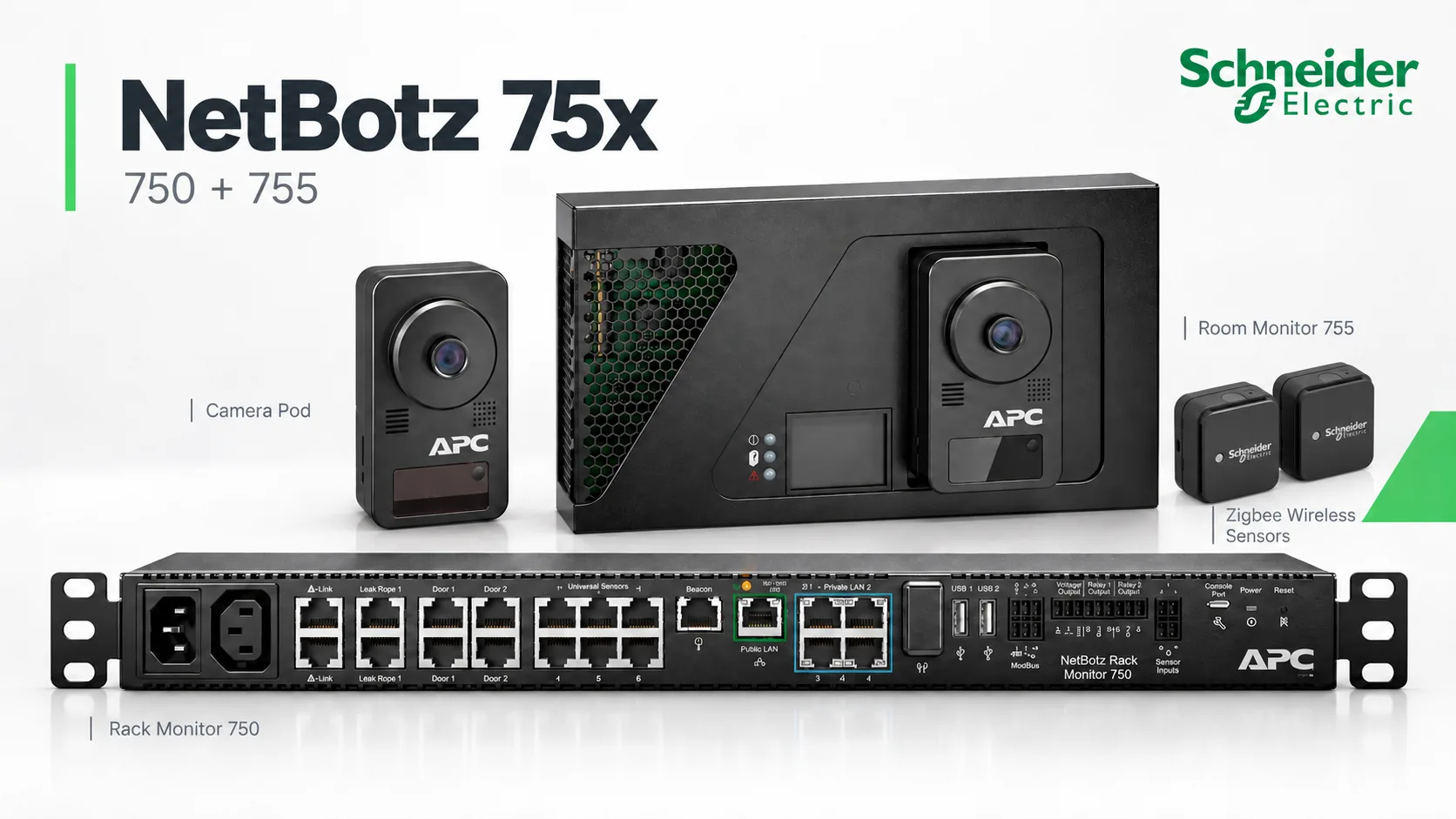
During my software engineering internship at Schneider Electric, I worked on the NetBotz 750 and 755 series of devices. These monitoring and management devices connect physical hardware, system services, and a web interface. My contributions spanned product features, security, automated testing, developer tooling, and hardware lab support.
Product features and fixes
Improved alarm-configuration interactions and investigated issues with logging, temperature units, date/time settings, and device configuration. This work involved tracing behavior across the web interface and the services running on the device.
Security
Contributed to authentication improvements, credential handling, system-component upgrades, and validation of reset and session behavior. My work included implementation, testing, and investigation of security-related issues.
Testing and developer tools
Built Bash testing utilities, Docker-based test environments, coverage reporting, and scripts for diagnostics and benchmarking. These tools supported repeatable checks for shell scripts and system services as part of the development workflow.
Builds and system reliability
Added image-validation checks and investigated image size, storage behavior, and operating-system issues. The work connected build tooling with hands-on debugging of the systems running on physical devices.
Hardware and team support
Provisioned lab devices, tested hardware integrations, compared camera APIs, documented dependencies, and participated in code reviews. Alongside software development, I helped maintain the hardware setups used for engineering and validation.
About this overview
This page summarizes my internship contributions. Internal names, implementation details, and proprietary materials have been omitted.
Highlights
- Improved CI/CD pipeline reliability by developing a Docker and Bash test framework for shell scripts, automating pre-merge validation and reducing manual regression testing
- Strengthened embedded product security by upgrading critical system components, enforcing authentication policies, and eliminating credential exposure across internal tooling
- Resolved 50+ cross-stack issues, strengthening security, maintainability, and user experience through careful debugging and system improvements.
- Increased engineering productivity by building automated testing tools, system diagnostics, and deployment automation for embedded Linux environments
- Improved release quality by implementing build-time validation checks and analyzing image size regressions across product versions
- Supported engineering velocity by maintaining embedded device lab infrastructure, configuring network test environments, and documenting hardware integration APIs